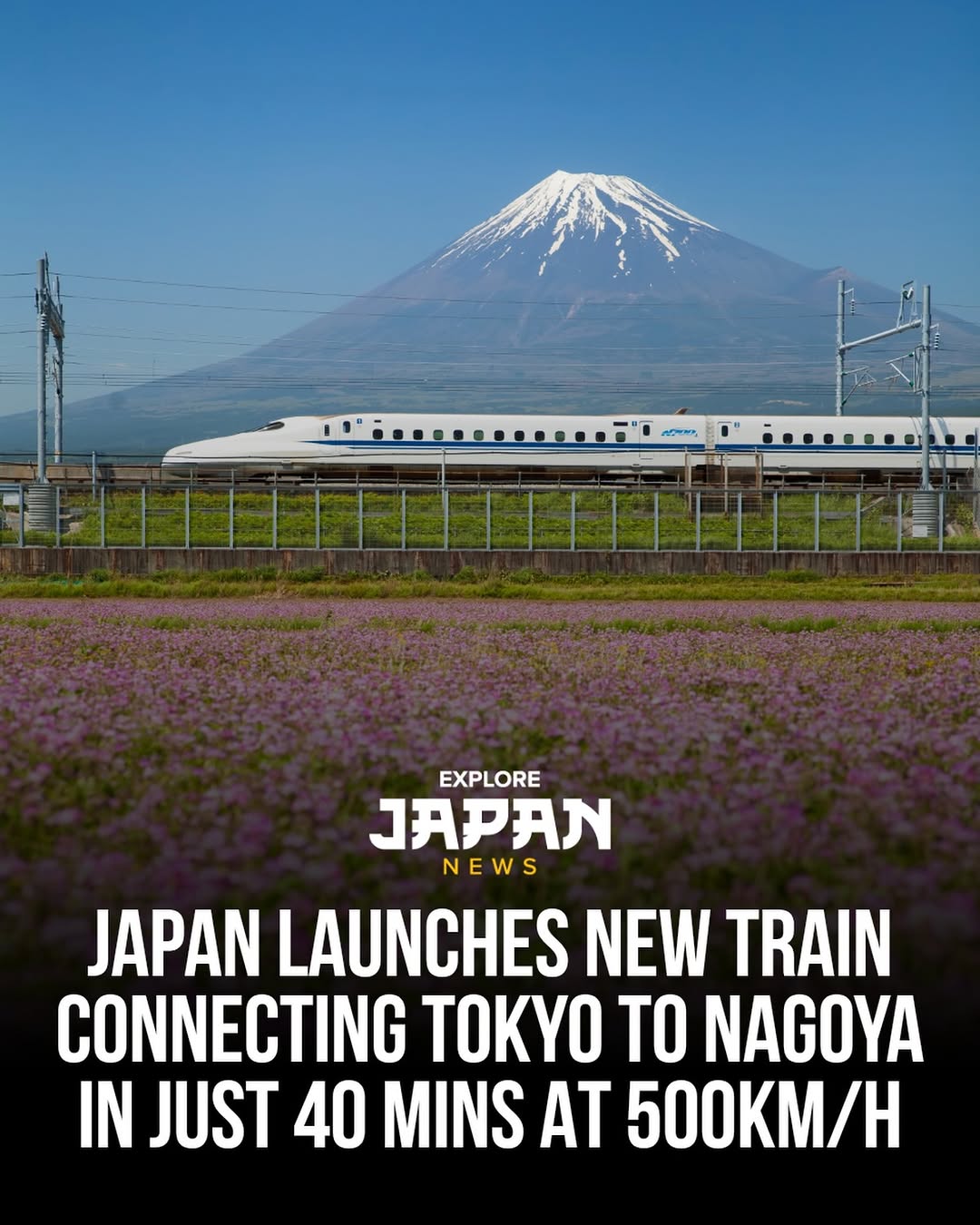
Japan has officially unveiled its revolutionary Chuo Shinkansen maglev line, connecting Tokyo to Nagoya in an unprecedented 40 minutes. The train, capable of reaching speeds up to 500 kilometers per hour, represents the next evolution in high-speed rail travel.
The new service began operations this month, marking a historic moment for Japanese transportation infrastructure. What once took nearly two hours by conventional Shinkansen can now be completed in less than half the time.
A New Era of Travel
Central Japan Railway Company (JR Central) has spent decades developing the magnetic levitation technology that makes these speeds possible. Unlike traditional trains that rely on wheels and tracks, the maglev floats above the guideway using powerful electromagnets, eliminating friction and allowing for smoother, faster travel.
"This is not just a train. It's the future of intercity transportation. We're connecting Japan's major economic centers in ways that will transform how people live and work."
The line currently operates between Shinagawa Station in Tokyo and Nagoya Station, with plans to extend to Osaka by 2037, which would reduce Tokyo-Osaka travel time to just 67 minutes.
What Passengers Can Expect
- Speeds up to 500 km/h (311 mph)
- Tokyo to Nagoya in approximately 40 minutes
- Comfortable seating with Mount Fuji views
- Minimal vibration due to magnetic levitation
- Departures every 10 minutes during peak hours
Tickets are currently priced at approximately 7,000 yen ($47) for a one-way journey, making it competitive with existing Shinkansen services while offering significant time savings.
The launch has generated excitement among both domestic travelers and international tourists planning visits to Japan. Travel agencies report a surge in bookings specifically to experience the new maglev service.